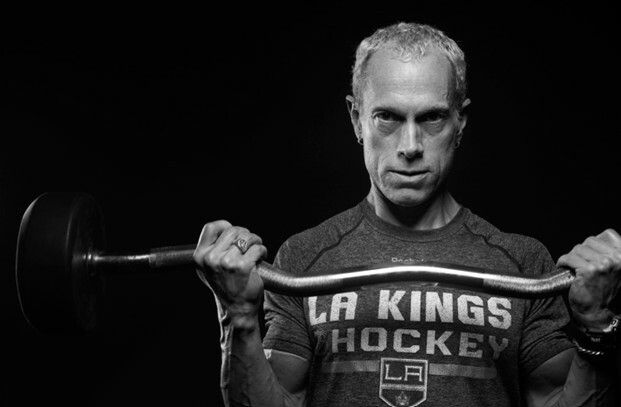
From Bypass Surgery to Global Support: Paul Chatlin’s Heart-Stopping Transformation
- Ximena Díaz Velázquez

- Nov 27, 2025
- 25 min read
Updated: 20 hours ago
🚀 The Moment That Changed Everything: Bypass or Beans?
Imagine being 54, a busy, active man, only to be told you need immediate bypass surgery, or possibly a heart transplant. This was the terrifying reality for Paul Chatlin, the founder of Plant-Based Support (formerly PBNSG).
Paul, whose own father and three uncles had severe heart disease in their 50s , was already a "hot mess," dealing with an enlarged heart, leaky valves, a heart murmur, and more. But as he was wheeled toward the operating room, a miracle happened. His doctor gave him a radical, last-minute alternative: change your lifestyle.
That single choice to embrace a whole-food, plant-based (WFPB) diet (giving up meat, dairy, and oil) did more than just save his life; it launched a global movement to help millions find the same path to health.
In this first episode of the Plant-Based Support Podcast, Dr. Niki Davis interviews Paul about his incredible journey from a self-proclaimed "absolute carnivore" to the leader of the world’s only global plant-based support organization.
🔬 Dr. Niki’s Insight: The Science of Support
While the core of this episode is Paul’s inspiring story, the foundation of this podcast is evidence-based wisdom.
Dr. Niki Davis, a lifestyle medicine physician who transitioned from being a rocket scientist to a healer, emphasizes the critical role of community in transformation. The Plant-Based Support community is the living proof that this journey isn't just about data; it’s about emotional resilience and belonging.
As Paul's own experience shows, having a support network is vital when making a radical change like transitioning to a WFPB lifestyle. That's why the Plant-Based Support community exists: to help you make these life-saving changes successfully.
🍏 The 14-Day Shift: From Angina to Agility
Paul’s transformation was startlingly fast. Within just 14 days of going plant-based, two key things changed:
Taste Buds Changed: The food, which he initially endured, became more palatable.
Angina Vanished: The elephant on the chest feeling (the debilitating pain that stopped him in his tracks) disappeared.
In the following months, Paul dropped 70 pounds and has kept it off for 14 years. His recovery highlights a profound truth: the foods we eat have an immediate, powerful impact on our health, often surpassing what we think is possible based on genetics alone.
Actionable Tip from Paul: To stay satisfied and reduce hunger, Paul starts his day by drinking about 60 ounces of water before eating. He also found routine helps, sticking to a breakfast of oatmeal with fruit, flax, and chia seeds.
🎙️ The Birth of a Global Support Movement
Paul’s personal miracle led to a desire to give back. After a struggle to get his insurance to cover a plant-based cooking class, he decided to use the $120,000 cost of the bypass surgery he avoided as seed money to start a local support group.
He placed a $20 ad in a local paper, offering to share his story with the first 20 people. The response was immediate and overwhelming, leading to:
Community Core: 18 of those original 20 attendees became volunteers, remaining connected 14 years later.
Rapid Growth: Initial meetings with Dr. Joel Kahn quickly grew beyond capacity, proving the immense need for this information.
Virtual Expansion: The organization went fully virtual during COVID, allowing it to become the only global support organization for plant-based nutrition.
Paul’s ultimate wish is for people to discover the power of plant-based nutrition and lifestyle medicine before they are knocking at death's door.
🔑 Key Takeaways from the Conversation
The Power of Choice: The most powerful prescription available is often lifestyle change, which can offer an alternative to major surgery.
Food is Not the Focus: Paul learned to prioritize life's experiences over food, simplifying his eating to make it "not the most important part of my life".
The Science is Timeless: Plant-Based Support's expansive library of past speaker events remains relevant because the science of plant-based nutrition hasn't changed in 14 years.
Join the Movement & Find Your Support!
If Paul Chatlin’s story of reversing heart disease and avoiding bypass surgery through plant-based living inspires you, you don't have to walk this path alone.
Connect: Visit plantbasedsupport.org to join the community and attend virtual events.
Support: Help us reach more people by making a donation at the website.
Subscribe: Follow, subscribe, and leave a review for the Plant-Based Support Podcast wherever you listen.
Better support, better outcomes. Let’s walk this path together.
Episode’s Transcript
Please understand that a transcription service provided the transcript below. It undoubtedly contains errors that invariably take place in voice transcriptions.
RMEP Podcast (00:02)
Hello everyone. I'm Dr. Niki Davis, and this is the Plant-Based Support Podcast, where we share evidence-based wisdom, real stories, and support for your journey to better health through plant-based living. Now, I worked as an engineer on the Space Shuttle program before changing my own health and career when I moved to a plant-based diet. And now as a lifestyle medicine physician, I help patients all over the world at lifestyletelemedicine.com.

In today's episode, we will be chatting with Paul Chatlin, the founder of Plant Based Support with his own amazing story of transformation from impending bypass surgery to healthy and happy. Now, first of all, I just want to let you know that this is our very first episode of the Plant Based Support podcast. And one of the really exciting changes that we've had recently is something you may have already noticed.

We have changed our name from PBNSG or Plant-Based Nutrition Support Group to Plant-Based Support. This new name aligns our mission of support and inclusivity. And let's be honest, it's a lot easier to say and remember. So I am so thrilled and so excited to introduce you to our guest today, Paul Chatlin, who is the founder of Plant-Based Support.

All right, Paul. So first of all, welcome. Thank you so much for being here today.

Paul Chatlin (01:31)
You know, you gave me goosebumps. You could actually see them, I think, on video just because, you know, this is our first and I'm so glad that we get to hang out together.

RMEP Podcast (01:42)
Me too. All right, well, you we know a little bit about you that you are the founder of Plant Based Support that used to be Plant Based Nutrition Support Group. But why don't you just start by telling us who are you and what brought you to this plant based world?

Paul Chatlin (01:59)
Well, who I am, I'm not sure at times who I am, you know, cause it changes, you know, there was Paul before heart disease and there's Paul who's living his best life today. So who is Paul? Well, I would say that I grew up in a nice home with good parents in Detroit, moved to the suburbs at 13 years old.

Uh, you know, it was, uh, I had a, I'll just say I had a really great time growing up. And unfortunately, my mom passed away when I was very young and, uh, my dad gave me total freedom at the age of 14 to live my best life. And I never made it to jail, but I had a lot of fun along the way. And then I got married at, uh, 20, uh, 22 had my first son.

And three years later, a second son. that unfortunately, or fortunately, marriage lasted for nine years. ⁓ was heartbreaking and I had to learn how I got custody of my kids. So I had to learn to be a mom, dad, and, ⁓ I always loved sports growing up. So I played baseball in college and I played all the sports in high school. So I decided to be a coach for my two sons, for the next 10 years.

So my life was filled with my two sons and all the sports and the younger one helped me when I was coaching the older one and the older one was my assistant coach and it brought us really close together. And then I was lucky enough 25 years ago to meet the love of my life, now married 25 years, Tracy. ⁓ And ⁓ she's the best thing that ever happened to me.

She made me kind of look at things a little differently. And then I had to look at things differently about 14 years ago when I woke up one day and I had this incredible pain in my chest. And you know, and it went away. Like I woke up, I'm going, ⁓ my, what is this? But after like about five minutes or so, the angina went away. And then I would carry on with my day and come back a little bit at night.

And then we kind of had this unfortunate love affair for the next couple months, because it would just keep the same way. Now, funny enough, I was still able to be active and doing things, but every morning it would remind me that something was wrong. And I remember being in a meeting and out of nowhere I was just sweating and I just felt terrible. I walked outside. I literally could not take seven steps without just stopping and saying, you know, something is really wrong. So what did I do?

RMEP Podcast (04:53)
Wow, and

Paul, how old were you at that time?

Paul Chatlin (04:56)
54, you know, just turned 54. And you you look back and it was like, my dad and his three brothers all had heart disease in their 50s and three out of four never made it off the operating table. So I lost my whole family during, you know, when I was a kid at, you know, 10, 11, 12 years old, all the men in my life left me minus my dad, my dad.

RMEP Podcast (04:59)
Young. ⁓

Paul Chatlin (05:21)
made it through a quadruple bypass, but truly it was the only time I ever saw him cry and he cried for four days. You you got to think back of the timing of this and the surgery and how they go about it back, you know, 30, 35 years ago, it's a lot different than you today. So, yeah, so I knew something was wrong. I went and saw my doctor. Now I was just keeping this because I'm a silly man. I wasn't telling anybody what was wrong with me.

RMEP Podcast (05:35)
Yeah.

Paul Chatlin (05:48)
I didn't want anybody to worry about me. I still have this problem today. I keep it to myself, which, hey guys, uh-uh, you need to share it with your wife. I didn't at that time. And my doctor heard right.

RMEP Podcast (05:57)
Right, and it's also

scary because if you go to see someone, then they have to tell you that there's something wrong, right? And you don't want to be told that there's something wrong.

Paul Chatlin (06:06)
Yeah.

I must admit, know, you know when like you, you know, sprain an ankle or you bend a finger or something, you know, okay, I know what happened. I know why did. This was something that, you know, when you have angina, it's like, like, you know, when they say elephant on your chest, yeah, that's pretty much what it is. And I just, just every time I hear the word angina, I think of exactly how it felt. And it literally stopped me in my tracks. So,

I went and saw my doctor and he heard a heart murmur he had never heard before. And I could read or digest this fairly quickly because, I've said the story a few times, which is he sends me immediately the next day to a heart doctor, cardiologist. I do all the tests, but the heart catheter and the heart biopsy. And this guy had been doing it for a long time. He pulled me aside as I'm walking in. He goes, I'm going to schedule for you for immediate biopsy and catheter in about two weeks. So just lay low, but...

I hate to tell you, but my experience is you need either bypass surgery or a heart transplant. know, bypass is one thing and no one wants to hear that, but a heart transplant. I'm like, boy, I better tell my wife, right? I better tell my wife. I drive home, on the way home, I stop at her office and I said, I need you to talk to you in your conference room and I'm explaining this to her. And I said, I'm sorry. just, thought either ignorance was it would just go away or

I you so much I didn't want you to worry about me but now I'm worried about me so you need to be worried about me too." And she was in tears and I think I was in tears and her boss walks in and I have to explain what's going on to him and it turned out that was like a miracle because he said just stay here and within about an hour and a half he got me an appointment at the Cleveland Clinic.

So, you know, and that was the day before I was scheduled for Beaumont Hospital, local hospital to have the heart catheter and biopsy. So we drive out to Cleveland and they could do everything. You know, any tests that you want, any imagery you want, they do it all right there and could turn around the results quickly. And it was the first time I was at the Cleveland Clinic. It was the first time I met my doctor and his title was he was the director of heart transplants for Cleveland Clinic.

it got the information and they thought this guy may need a heart transplant. So here I am now all being wired up. I go in and just before I you know have the heart catheter done I do the old you know little boy thing. Hey God if you get me out of this problem I owe you one. Like I hadn't said that about 20-100 times in my life.

But you know, all of a sudden, so I'm getting the heart catheter, I could hear my doctor, because they got you kind of in twilight. So I could kind of make out what he's saying and can't really make out what he's saying. I am scared because you you're wired to everything and it's just not a good place. You know, generally they don't send you home after this stuff and say, you're okay. You know? So I hear him going, yes, yes, yes. And I finally kind of get my wits about me. And I'm like, why were you saying yes, yes, yes, doctor who I just met.

RMEP Podcast (09:17)
Right.

Paul Chatlin (09:25)
He said, because you don't need a heart transplant, but you do need immediate bypass surgery. So I'm being wheeled in and sure enough, we get close to that door. I'm all prepped, ready to go. And I kept thinking to myself, just wake up, just wake up, whatever you do, just wake up. You'll deal with whatever it is. And then the second miracle pops at me, which is he looks at me goes, I've only offered this to one other person in 20 years, but would you be willing to change your lifestyle?

And maybe you don't need bypass, yes, was my answer. I'll do it. Like, but, but you got to understand at 54, like when someone says, I'm going to, you got to change your lifestyle. I didn't know what that meant. Like I didn't know what a lifestyle change meant. it mean? Like, you know, I have to run more or, know, or change my, the team I like and root, I'm rooting for like what's lifestyle change. And then he said, well, you're to have to give up meat, and oil. But I said, I'll do anything. I don't want bypass because here I am thinking of my dad.

and my uncles and what happened to our family because I thought it was all genetic. I also at that time had enlarged heart leaky valves, scar cytosis, the right side of the artery, a left bundle block. I had the heart murmur, leaky valves. I was a hot mess. So the heart being a muscle, ⁓ because I used to work out a Holic up to that point, ⁓ they put me on these crazy meds. I literally would sleep 16 hours a day because they wanted the heart to shrink so the valves would leak out or bleed out.

RMEP Podcast (10:51)
Yeah.

Paul Chatlin (10:51)
So

it's kind of weird being the most active person I know to now sleep in 16 hours and as soon as I'd wake up I'm like, I'm hungry. What am I going to eat? Ugh. I got to eat this broccoli and the peas and all these vegetables. Like I was an absolute carnivore. To give you an example, when I go to a restaurant and they had oil with bread, I'd say, give me two more things of oil and another loaf of bread. Or I loved Coca-Cola and it was like, don't give me half a Coke with ice.

Give me three of them with no ice and then give me a glass with ice. Because I always thought, hey, if I work out, I'm good on the other side until I had the chest pains. So here I am thinking to myself, okay, first of all, think back 14 years ago, I think there were like three cookbooks on plant-based nutrition. Okay, three. So I didn't have a lot to choose from, but I said, when I wake up, I will endure anything for a period of time for 60 days. That was my time.

I said for 60 days. So what happened? First, I had to go to a cooking class. I'll get to that in a moment. I started eating plant-based and after 14 days, two crazy things happened. One, my taste buds changed. You know, it was a weird thing. Like, you know, I was a carnivore, man. I just loved meat and pizza and all the stuff that gave me the heart disease. And then I started, I'm not gonna say I love vegetables. I still don't love vegetables.

but I didn't mind eating beans and peas and colorful stuff, vegetables. I didn't mind eating it and I had no choice because I said I was gonna do it. So the taste buds changed, so it got more palatable. But also my angina went away. And as another little perk, I weighed 230 pounds. I'm gonna show you this. I don't share this with too many people. This was Paul, if you could see that.

RMEP Podcast (12:32)
.

please.

Wow.

Paul Chatlin (12:47)
That's Paul, I was power

RMEP Podcast (12:48)
I can't even imagine that that's you.

Paul Chatlin (12:51)
lifting, know, I was living my best big life right there. So now all of a sudden, I'm, you know, two weeks up to like two months and the waste just dropping off me. It's wild. I mean, really it's pretty wild. And I've been able to keep 70 pounds off me now for 14 years. And I got a thank you letter the other day from my knees and my ankles and my shoulders.

RMEP Podcast (12:55)
Wow.

Paul Chatlin (13:17)
my hips. They all wrote me a letter saying thank you for taking off all that weight, you know. So that all being said, I thought hey I got to learn how to cook this stuff because it's on me. It wasn't on my wife or anybody else to make the cooking change. It's on me. So I went to the Esselstyn cooking class. Keep in mind I made a promise to God. I come back from the cooking class. I expense it for 700 bucks, 750 whatever it was, and

They reject it. I go, this is my mission. I'm going to work. I'm going to try and get a pay code at Blue Cross Blue Shield so other people could go to a cooking class and learn how to cook plant-based and they don't have to pay for another pocket. So after like two, three weeks, I get to the highest level. I think it's seven rungs of the ladder at Blue Cross Blue Shield. And they said, sorry, the only way that will change is you have to work with your, the politicians in Michigan and change the pay code. Now keep in mind, Michigan's the second biggest dairy.

producer and the capital is an hour and a half from my house. I'm like, no way, I'm not doing it. So what am I going to do to give back? I thought, you know I'll do? I'll put a $20 ad in the local paper and I'll say, Hey, I've been able to stave off bypass surgery. Let me share with you how I did it through a plant-based diet and I'll open my house to anybody, the first 20 people, if you're interested within two days. Yeah.

RMEP Podcast (14:41)
Okay, wow. my gosh. And,

and I guess what's really amazing about this is, you you chose lifestyle instead of the bypass. And so you saved a lot of money for your insurance company. Right.

Paul Chatlin (14:56)
you know it's interesting,

I $120,000 which is the price and they won't reimburse it. So I put that money aside because I said you know that's the money I'll work off of to start plant-based nutrition support group now called Plant-Based Support. But we'll get to that in just a minute. Okay.

RMEP Podcast (15:01)
and yet they won't reimburse you for the cooking class.

Okay, yes, so you

put in this $20 ad.

Paul Chatlin (15:20)
$20 ad within two days, 20 people signed up within four days. all at my house. What's so cool about it though, of those 20 people, 18 of them are still connected to me and are volunteers of the organization to this day 14 years later. That all being said, I said, you know what, let me do it again. Same thing happened within two days, another 20 people showed up at the house. So I'm like, my God, I'm onto something. So this is the moment where I'm like, okay, so what do you want to do? Do you want to grow this or have you done enough?

Like, you you help 40 people.

I needed to do more, I felt. More people needed to know about it. So there were a lot of medical questions and while I love learning, I am not a doctor and I didn't want to give somebody some wrong advice even though I kind of know about nutrition. So I said, I need to have a holistic cardiologist on my side. So I called the local hospitals, three of them. I said, me three names of lifestyle cardiologists. They all gave, by the way, to get to the head of cardiology at a hospital,

my God, it's like pulling teeth. know, like, who's Paul Chalem? I'm not talking to him, but I would leave these messages saying, I'm going to call you every day until you could provide me with three names. I was determined. So they finally did. And one name was repeating. It was Dr. Joel Kahn. I say that because here he is, he is now my brother. ⁓ I don't mind saying this. You know, we may have different views on life and we have to keep, you know, as

of the founder of the Plant-Based Nutrition Support Group. I always have to stay in my lane and the people who connect to me that I care about, they could say anything they want outside of it. But here I am that Joel Kahn started this journey with me 14 years ago. And our first get together was at the hospital and we thought we'd have, we had a room for 80 and 123 people showed up. The next month we had a room for 80 and 141 people showed up. We were like,

wow, we're onto something here. And it was right up his alley because he's lifestyle cardiologist. So two days before our third meeting, Beaumont kicked us out. They said that they couldn't continue this with us. They didn't have a room big enough. They did, but keep in mind, they were a sad diet hospital and we were plant-based. Politically, you know.

RMEP Podcast (17:43)
standard American diet, right?

Paul Chatlin (17:47)
So here I am running around, found the Birmingham school systems. They opened up their heart, their doors to us. And for the next 10 years, we do live events every single month, both cooking and speaker events. And we started growing this small group network of 54 small groups around. It was mostly on the Midwest, but we've got a few other states and we were expanding and growing and then COVID hit. And within two days, I had to say, you know what? We're canceling all of our activities and we're going to go virtual because

We have no choice. could not, you know, most of our members are probably 55 and older and I could not live with myself if something happened to them during a live event. So we went virtual and now I could really fast forward it. Now it's four years later and who is Plant Based Support? We're the only global support organization for plant-based nutrition. And I'm so, so proud of that. Number two, what are we?

RMEP Podcast (18:27)
Right?

Paul Chatlin (18:47)
We are an organization that is going to be developing and introducing a brand new website, a new name, and we're going to be automating our services. And soon we'll be offering other things to our membership. Right now, we offer virtual connections of support on almost every modality that you could think of. We have a very inexpensive membership, free, I think, for 14 days. then...

Use this as much as you want. We we recorded every meeting we ever had. we have a library, by the way, flash, the science hasn't changed since I started 14 years ago. So you could go back, pull whatever speaker you want and listen and not be worried that his talk is outdated because the science hasn't changed. And then another big thing that I'm saying is that we've been a skeleton board up till this past six months.

And it's the first time ever and Niki, you're part of it. And I can never thank you enough that we have a board of directors that is, that wants to be engaged, wants to work, wants to help. And I never realized the power of a board until I have the board that we have right now. So that all being said, it's kind of a long short version of who I am. I'm still happily married. I'm now a grandfather. ⁓

I miss my dog Sophie, who's like right there. You know, I'm I'm busier than I have ever been, and I'm still trying to grow up at 67. That's me.

RMEP Podcast (20:17)
⁓

Well, thank you for sharing that story. I just think it's so incredible to see someone who had this amazing transformation in their own life, this story of, hey, this wasn't something I necessarily wanted to do, but I also didn't want to go through and have this bypass surgery. I wanted the other option. And that you saw and continue to see that there are people out there that don't even know that that is another option.

It isn't necessarily that you're giving, know, that a lot of people have this choice and they're choosing to get the bypass surgery. It's that people don't even know that the choice is there. And so by starting plant-based support, you're giving people that, that choice, right? If people can learn about this before they need to be on the gurney, ready to go get the surgery, they can make that change ahead of time. That's even better.

Paul Chatlin (21:14)
know,

RMEP Podcast (21:25)
Right? Had someone told you back when you were in your twenties that this was possible, especially with your family history. And Paul, I have a similar family history and that my dad ⁓ had severe heart disease and had a heart attack ⁓ when he was in his sixties. And I was the only one at home when it happened. I was a teenager at the time. I want to say I was about 13 years old. I didn't know what to do. Thankfully. I mean, he did end up having a quadruple bypass.

Um, but thankfully he survived and he lived another 30, 35 years after that. So really, really grateful. But I also know that's my, you know, that's my family history. And I didn't want that same thing to happen to me. And so I was lucky in that I got to learn about this before it became a problem for me.

Paul Chatlin (22:03)
That's good.

RMEP Podcast (22:21)
And that's why it's important for me to also continue this for my own health, for my family's health.

Paul Chatlin (22:28)
Yeah, ⁓

I want people to know about it. What they choose to do with it is their choice. And even like my entire family, one son, I've got three now, one of them is vegan, mostly plant-based. The other two are not, but they know about it. And to me, that's good enough. As long as people know about it, then they can make their choices. Like you said.

RMEP Podcast (23:21)
Absolutely.

Paul Chatlin (23:24)
You know, it's still not being taught in medical school. It's, know, you go to hospitals, they're not providing plant-based meals. Doctors aren't, you know, we're just not talking enough about it. There's not enough rest, you know, so many things going against us. But again, we are all adults. We make our own choices, but you don't know what you don't know. So the hope here is that people like you and I keep spreading the word and more people know about it. That's

RMEP Podcast (23:49)
Yeah. So just thinking for you personally, was there anything as you were making that transition? I mean, you talked a little bit about like your taste buds changed and maybe you still don't even love vegetables as much. ⁓ But was there anything that you found either difficult or surprising in that initial transition to eating more plants?

Paul Chatlin (24:14)
Well, you know, when I think about like, you know, like generally speaking, I liked fruit. you know, eating fruit was not going to ever be a problem. The vegetable thing that, you know, like my idea of a vegetables was iceberg lettuce with carrots and ranch dressing and bacon or something, you know, something bad, you know, but ⁓ what, what I have surprisingly learned is that,

I don't mind, like I have, I'm a boring eater, especially in the morning and afternoon. So first, just my secret sauce is I wake up and I drink about 60 ounces of water before I start my day. And I do that to hydrate myself. I do that because then I'm not as hungry. And hey, and by the way, I just think it's so cool. I'm not trying to pimp anything new, but this is hydrogenated water. Now I'm just, this is what I drink out of.

And you can see it's got blue and it's going to click. Ooh, look at that. It reminds me of the lava lamp when I was a bad boy. All right. The point being here, you know, the point being is that I drink a lot of water in the morning and then I have the same breakfast and or lunch and I could flip flop of it. If I'm in the mood for oatmeal with a whole bunch of fruit and then I take chia seeds and flax meal and put it all together and wham. I have the same and I love it because I could change up the fruit.

RMEP Podcast (25:16)
Hahaha! ⁓

Paul Chatlin (25:36)
Sometimes it could be, you know, apples and a handful of walnuts and raisins. And sometimes it could be strawberries, blueberries. I love blueberries by the way. So that's an easy meal to make and repeat. And then I've got a love affair of kale. Like I never thought I would have anything but iceberg. But so here, just because we've got a few minutes, here's an incredible detailed salad dressing. Half an orange, quarter lemon.

RMEP Podcast (25:47)
Me too.

Paul Chatlin (26:07)
pepper to taste, add a little teaspoon of garlic, and then chop up some red onions. Bam, you got your dressing. And I've had that same dressing on my kale, which I take, I strip, I massage it, I put it into the salad bowl, I massage it again. I gotta admit, it's always kind of weird for me, that I'm literally taking my hands that are washed, I'm rubbing it on the food I'm gonna eat, I wash my hands again, then eat the food that my hands were on. I don't know, there's just something crazy about that to me.

RMEP Podcast (26:34)
Ha

You

Paul Chatlin (26:37)
⁓

But I have a bowl that's like, like if I could, like it's like, like this big, this big, you know, so I sit there and I take it upstairs where my office is and I just kind of eat it along the way. And by the time, you know, four or five o'clock hits, you know, I finished the salad. I'm still a little hungry. And then dinner's always a challenge, but I have since learned to batch cook. So whatever I make, I make it for like 10 meals and freeze it. Cause everything plant-based is great to freeze.

And I've got two friends who are plant-based chefs and every once in while I'll drop a big order on them. it's cause you know, if I'm busy, I just don't have time to cook. But yeah, I mean, I think the big takeaway on this is that I learned how to make food, not the most important part of my life. Cause growing up, it was always what do have for breakfast? What do you have for lunch? Where are you going for dinner? And now it's like, wherever you go, you go. And if I come with you, I'll bring my sack.

my sacks, my sandwiches, my you know whatever I'll bring my you know or I'll call ahead and see if I could work something out you know you know but generally speaking I'm not I don't choose any restaurants you can go anywhere you want I'll bring my own thank you ⁓ and I just learned how to make that I don't want to say dumb me it down but it just stopped being the most important thing of my life was food it's it's all the things I get to do because I'm eating the right food.

RMEP Podcast (28:00)
Absolutely. And I think about that a lot too, in my patients who are struggling with the social aspect of making this change, you know, they like to eat out and they like to treat themselves after a long hard week of work or whatever it is. They want to go out and see their friends and that's what their friends are doing. And that can be tricky, ⁓ you know, but it's the kind of thing where, you know, you can make it work. You can figure out how to make that

be something that you can be successful with. that's either you're finding restaurants that can accommodate or you're eating before you go. ⁓ It's definitely possible, ⁓ but it can be tricky. It really can. And so that's part of this plant-based support group is helping people through that, right?

Paul Chatlin (28:46)
It, Niki, Niki, you're so right.

Yeah, mean,

mean, that's why lifestyle changes. I mean, this is all part, when you think of lifestyle change, it isn't just about eating food. It's about, like I said early on, now, like my wife and I live in a house divided because my wife's family lived to hundreds. So she's not gonna change what she eats. Her family lineage is forever. She knows about it she's eating better, you know, but the point being is that it affects everything you do with everyone you love.

And it's on you. Like, like they have to accept you. It's not you accepting them. They have to accept you because it's such a radical change, you know? And all I can say is that, you know, I wish if I had like one big wish, it would be that I wish that people would connect with plant-based support, not when they've tried everything else and this is the last thing. Okay, I'll just have to give up on meat and dairy. And, know, I wish that they would say, ⁓ I've done the research.

RMEP Podcast (29:29)
Yeah.

Paul Chatlin (29:50)
eating fruits, vegetables, beans, and whole grains is better. They do their best every day to try to eat that way. And they do it in their 30s or their 20s or their 40s. And don't wait until they're knocking at death's door to make this change. Because you may not come back from death's door. You don't know. So that's my wish.

RMEP Podcast (30:10)
Yeah, absolutely.

Well, that is such a great way to end this episode. Paul, thank you so much for sharing your story with us. Thank you so much for being brave enough to start this plant-based nutrition support group, which is now Plant-Based Support. You have changed a lot of people's lives. You've brought people together who are also passionate about this.

and we need that. So I wanna thank you for what you've done and allowing me to be a part of it. It's just, I mean, I just, I get the chills too. I get the, so thank you. Now I do.

Paul Chatlin (30:50)
You just

like, you are. Thank you.

RMEP Podcast (30:55)
Yeah, well, all right. So for everyone listening, I would love to invite you to attend any of our Plant-Based Support virtual events and soon in-person events. ⁓ And of course, join our growing community at plantbasedsupport.org. And if you loved this show, help us grow at plantbasedsupport.org. Every donation helps us support more people like you on their journey to health.

Now, in addition to plantbasedsupport.org, you can also find us on YouTube, Instagram, Facebook, TikTok, LinkedIn. Feel free to subscribe, leave a review. ⁓ Check out our website. We would love to see you there and we would love to help support you in your journey to health. Thanks again, Paul.

Paul Chatlin (31:44)
Thank you so much, Niki. Thank you.

RMEP Podcast (31:46)
All right, bye bye.

All right, I'm attempting to stop the recording. It looks like we just might have frozen here. So just give me a minute.

Paul Chatlin (32:04)
to your button up on top.

RMEP Podcast (32:07)
There we go. Okay.

Paul Chatlin (32:13)
Yes.

That was perfect.

RMEP Podcast (32:17)
Yeah, that was good. It's still, it looks like it's still showing that it's recording. ⁓ Even though I hit the button, it's ⁓ delayed. So it should stop here soon. But we might wanna just stay on to make sure that everything.

Paul Chatlin (32:23)
Yeah, it's still recorded.